
CIA Exam Prep: How to Prepare for All Three Parts
In "CIA Exam Prep: How to Prepare for All Three Parts," the TAPA Institute tackles the transition from public accounting to internal audit certification by breaking down the three-part structure of the Certified Internal Auditor (CIA) exam. TAPA highlights the importance of leveraging specialized CIA tutoring to resolve intuitive hurdles—particularly for candidates lacking a strong business or IT background—and underscores how TAPA’s holistic approach to certification coaching can help professionals strategically overlap their CPA and CIA studies.

CPA Exam Tutoring: How One-on-One Sessions Accelerate Your Pass
In "CPA Exam Tutoring: How One-on-One Sessions Accelerate Your Pass," the TAPA Institute tackles the misconception that tutoring is only for immediate crisis management by breaking down the benefits of a structured, multi-week coaching program. By pairing ongoing coaching with intensive, short-term resources like boot camps and mindset coaching for exam anxiety, candidates can significantly improve their performance, noting that TAPA’s coached students have achieved a pass rate of approximately 85 percent.

Bar Exam Tutor vs. CPA Exam Tutor: Choosing the Right Coach for a High-Stakes Exam
In "CIA Exam Prep: How to Prepare for All Three Parts," the TAPA Institute tackles the transition from public accounting to internal audit certification by breaking down the three-part structure of the Certified Internal Auditor (CIA) exam. TAPA highlights the importance of leveraging specialized CIA tutoring to resolve intuitive hurdles—particularly for candidates lacking a strong business or IT background—and underscores how TAPA’s holistic approach to certification coaching can help professionals strategically overlap their CPA and CIA studies.

What to Expect From a CPA Exam Prep Tutor
In "What to Expect From a CPA Exam Prep Tutor," the TAPA Institute tackles the distinction between content delivery and strategic coaching by breaking down the specific role a tutor plays in a candidate's preparation. TAPA highlights that sessions are most effective when grounded in concrete evidence from recent practice performance—rather than vague requests for topic review—creating an iterative loop of practice, diagnosis, and adjustment that is essential for long-term success.

How to Find the Right Online Tutor for the CPA Exam
In "How to Find the Right Online Tutor for the CPA Exam," the TAPA Institute tackles the challenge of finding an effective coaching partner by moving beyond simple accounting knowledge to emphasize diagnostic skill and structural familiarity. TAPA highlights the importance of vetting prospective tutors on their specific expertise with your chosen Discipline, their history of working with retakers if applicable, and their ability to provide flexible scheduling and complementary support like boot camps or anxiety coaching.

The Benefits of Online Tutoring for CPA Exam Candidates
In "The Benefits of Online Tutoring for CPA Exam Candidates," the TAPA Institute tackles the transition of coaching from a niche convenience to the industry-default format by breaking down how virtual sessions specifically address the constraints faced by working professionals. TAPA highlights the importance of vetting programs by confirming that tutors are licensed CPAs familiar with the current CPA Evolution blueprint, ensuring that the service begins with an objective skills assessment to maximize efficiency and scheduling flexibility.

CPA Tutoring: How Personalized Coaching Boosts Your Score
In "CPA Tutoring: How Personalized Coaching Boosts Your Score," the TAPA Institute tackles the limitations of one-size-fits-all study materials by breaking down how personalized coaching addresses specific candidate pain points in real time. By integrating weekly sessions with targeted feedback loops and stress-management techniques, tutoring provides an efficiency and structural clarity that independent self-study often lacks.

How to Track Your CPA Exam Progress and Stay Motivated
In "How to Track Your CPA Exam Progress and Stay Motivated," the TAPA Institute tackles the psychological and operational challenge of long-term exam preparation by breaking down which metrics actually provide objective evidence of readiness. The article highlights the importance of using this data to replace exam-related anxiety with concrete confidence, while maintaining a balanced approach to testing readiness through periodic full-length reassessments.

The Ultimate CPA Exam Study Guide for First-Time Candidates
In "The Ultimate CPA Exam Study Guide for First-Time Candidates," the TAPA Institute tackles the overwhelming nature of beginning the CPA journey by breaking down the core structural, scoring, and operational components of the CPA Evolution model. The article highlights the importance of early intervention—advocating for the use of tutoring sessions to resolve specific comprehension gaps before they compound—and suggests that candidates incorporate stress management and formal boot camps as they move beyond their initial preparation phase.

How to Create a CPA Exam Study Plan for Each Section
In "How to Create a CPA Exam Study Plan for Each Section," the TAPA Institute tackles the challenge of moving beyond generic study outlines by breaking down the necessity of leveraging AICPA Exam Blueprints for every individual section. The article highlights the importance of maintaining an agile plan that is adjusted after every practice exam, advocating for the use of tutoring and boot camps as intensive support for candidates whose progress stalls despite their best efforts.
Building a CPA Exam Study Schedule by Section
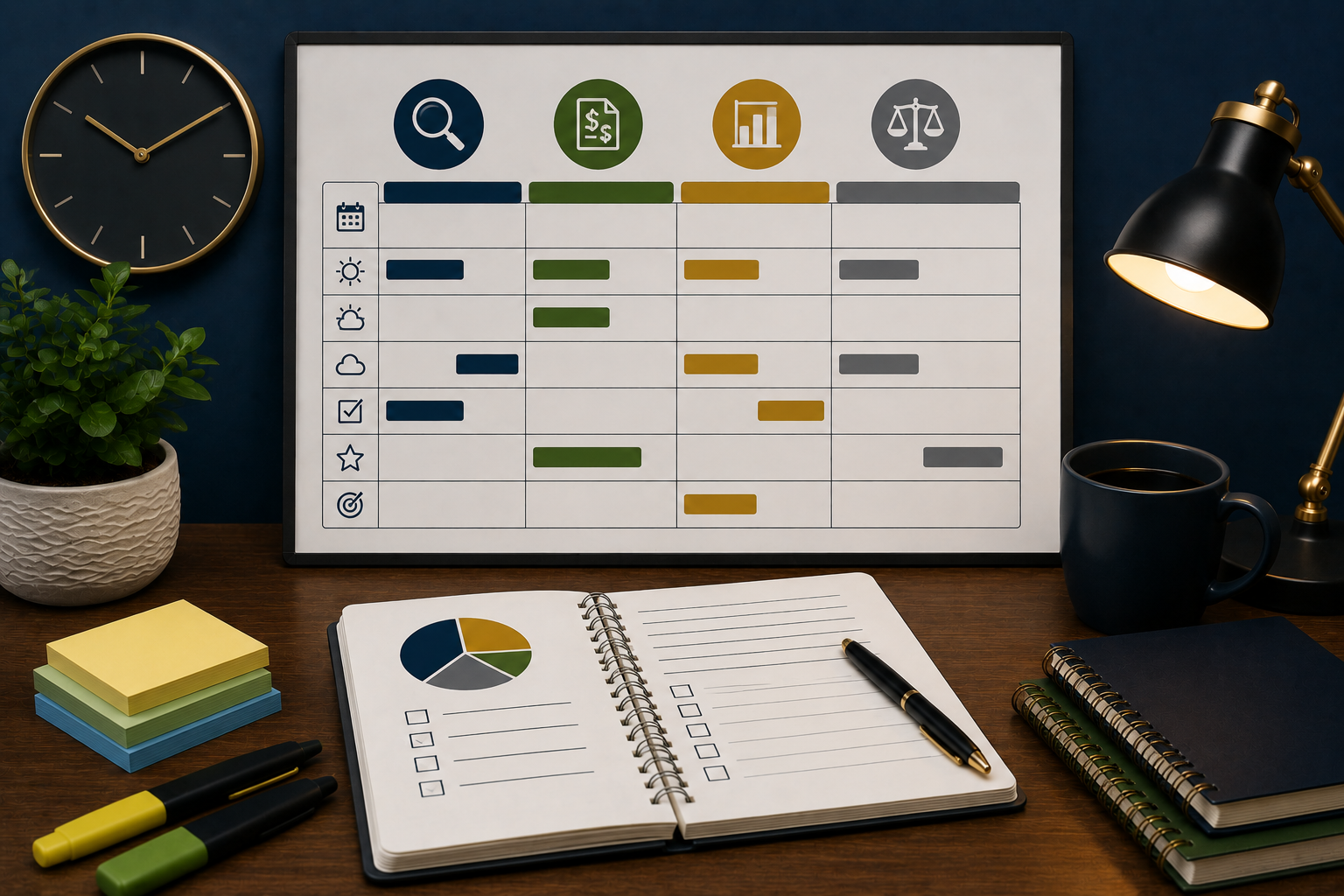
In "Building a CPA Exam Study Schedule by Section," the TAPA Institute tackles the operational challenge of creating a realistic timeline by breaking down the varied demands of the CPA Evolution sections. TAPA advocates for a balanced weekly structure that alternates between weekday content review and weekend practice simulations, and highlights the importance of using skills assessments to establish a personal baseline rather than relying on generic averages.

CPA Exam Study Essentials: What to Cover and How
In "CPA Exam Study Essentials: What to Cover and How," the TAPA Institute tackles the vast scope of the CPA Evolution model by breaking down the mandatory Core sections (AUD, FAR, REG) and their relationship to the specialized Discipline sections (BAR, ISC, TCP). The article emphasizes that while Core sections establish fundamental knowledge in auditing, GAAP, and taxation, Discipline sections require a deeper, specialized mastery that builds directly upon Core concepts.
How to Use a CPA Study Planner to Stay on Track
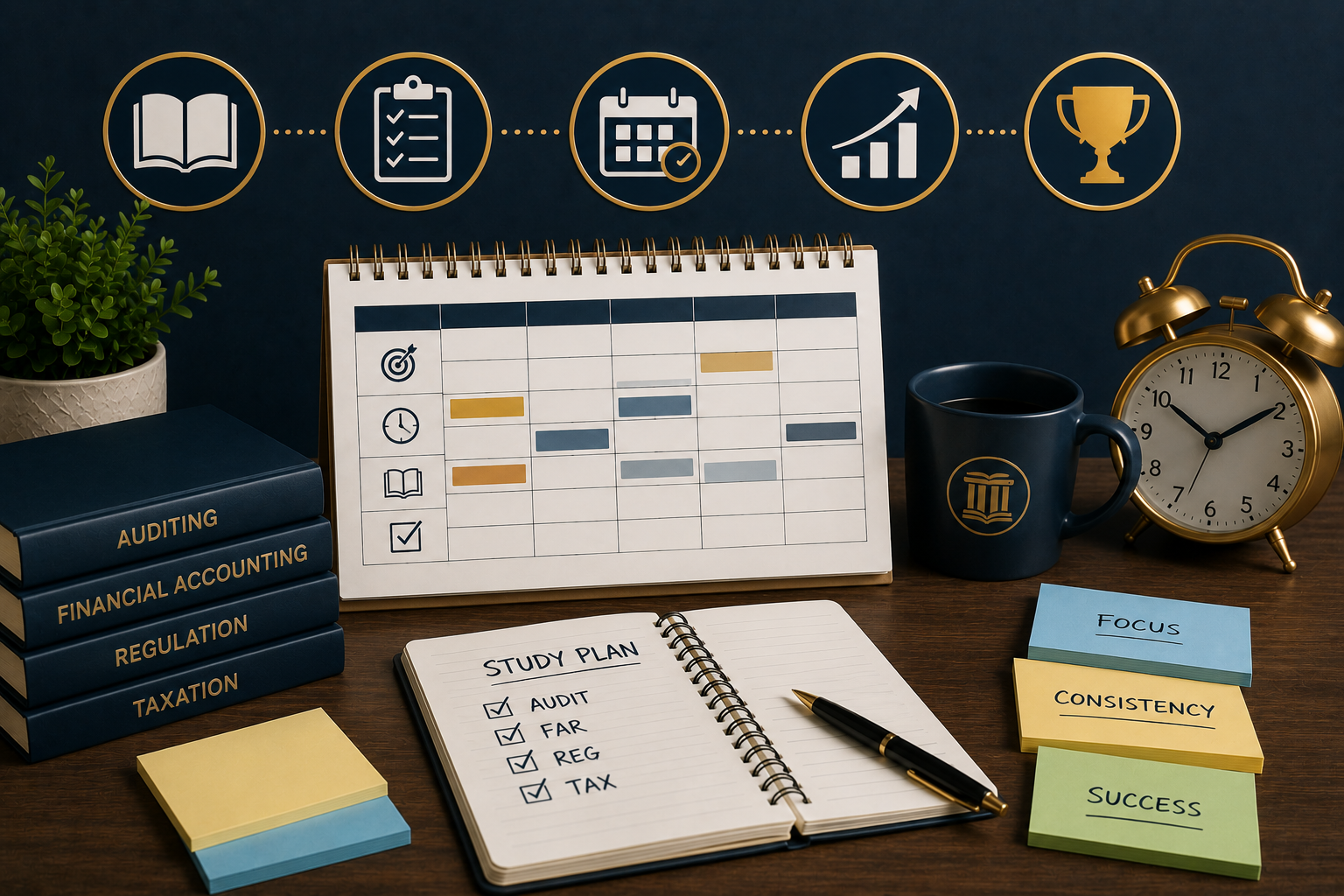
In "How to Use a CPA Study Planner to Stay on Track," the TAPA Institute tackles the operational gap between static study plans and daily execution by breaking down the essential functions of a high-quality CPA study planner. The article posits that the "winner" in terms of exam success is the candidate who uses their planner not just for time-logging, but as a diagnostic tool to identify patterns, monitor topic-specific accuracy, and manage review cycles before small deviations become unmanageable.

How to Schedule Your CPA Exam: Dates, Windows, and Strategy
In "How to Schedule Your CPA Exam: Dates, Windows, and Strategy," the TAPA Institute tackles the complex operational requirements of the CPA Evolution model by breaking down the critical distinctions between Core and Discipline testing windows. It emphasizes that using a skills assessment to establish a realistic readiness baseline before incurring the cost of an NTS or rescheduling fees is essential for maintaining momentum and avoiding the disruptive delays caused by having to wait for the next quarterly window.

Creating a Personalized CPA Study Plan: A Practical Framework
In "Creating a Personalized CPA Study Plan: A Practical Framework," the TAPA Institute tackles the operational gap between merely listing chapters and building an actionable study strategy by breaking down the essential framework of a truly personalized plan. TAPA outlines a rigorous three-phase approach—foundational review, practice reinforcement, and timed exams—while emphasizing that building pre-defined decision points for handling setbacks and integrating personal wellbeing are what prevent panic-driven, unfocused study sessions.
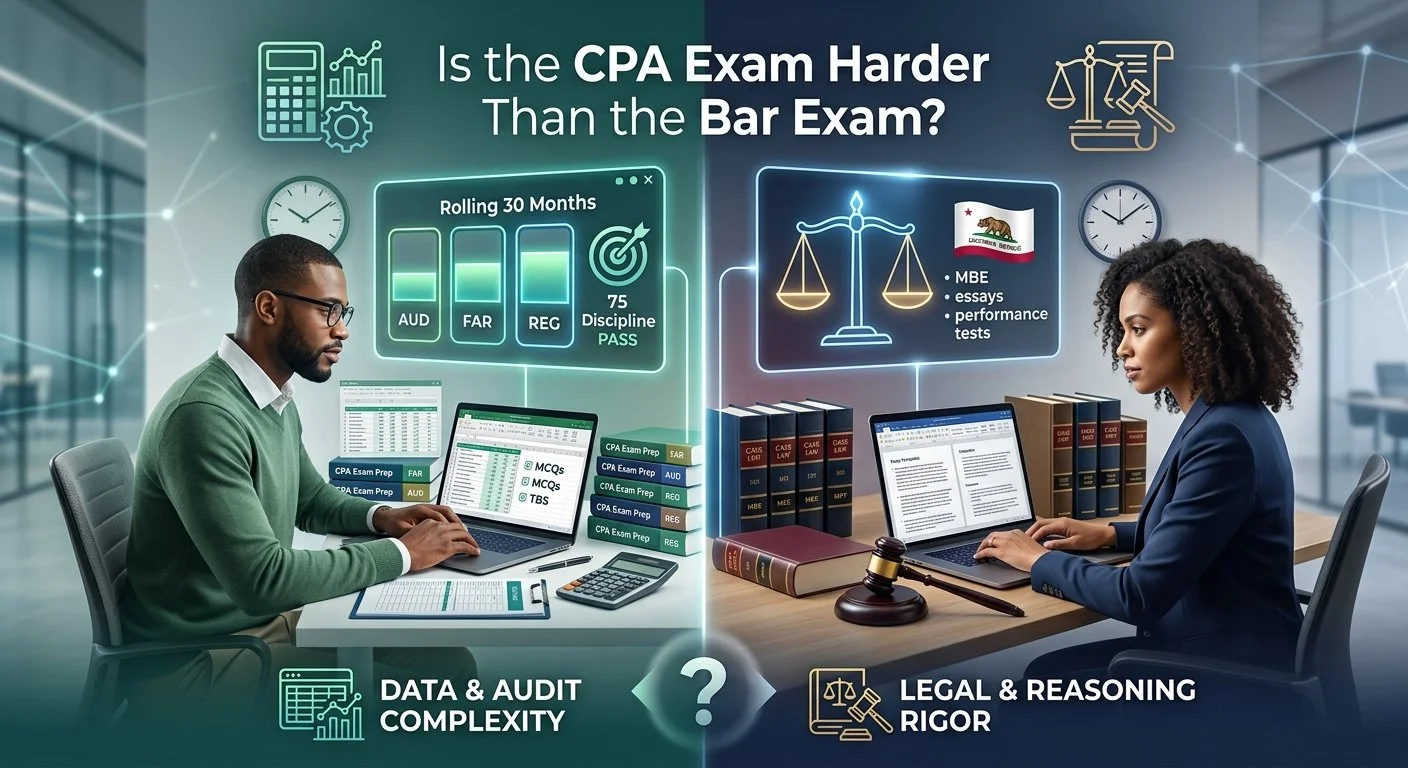
Is the CPA Exam Harder Than the Bar Exam?
In "Is the CPA Exam Harder Than the Bar Exam?", the TAPA Institute tackles a common professional comparison by breaking down the specific structural, operational, and domain differences between the two premier professional certifications. The article posits that the "winner" of the difficulty debate is highly subjective, as the exams assess entirely different cognitive skills and technical domains.
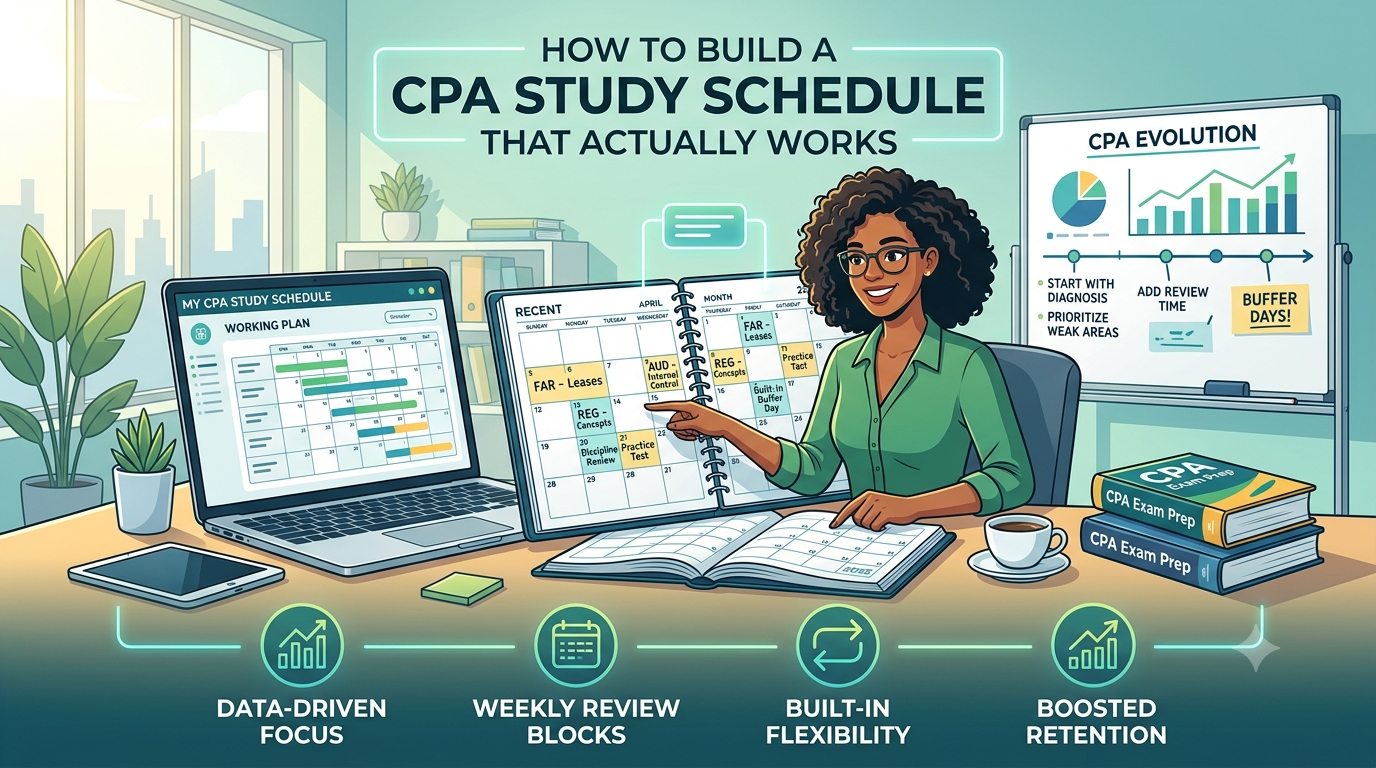
How to Build a CPA Study Schedule That Actually Works
In "How to Build a CPA Study Schedule That Actually Works," the TAPA Institute argues that a viable schedule is a dynamic tool rather than a static list of deadlines. The article moves beyond simple calendar-booking, emphasizing that effective preparation requires aligning one's study timeline with the realities of professional life, exam-specific constraints (such as Discipline quarterly windows), and the science of memory retention.