Best CPA Study Schedules for Working Professionals
Certified Public Accountant (CPA) title helps you progress further in your accounting and finance career. However, getting this credential as a full-time professional can be more difficult than for others. Balancing job duties with the intense work needed for the CPA exam usually creates stress and time problems. Being successful in this field means using an organized study plan, managing your time wisely, and having access to excellent study resources. This article is intended to help people with day jobs create the best study plans for getting their CPA certificate. It also stresses that strategic options such as online learning, example exams, and guided reviews at TAPA Institute help you prepare more easily. If you study methodically and use suitable materials, your self-assurance will rise, you will manage your time better, and you can increase your chances of passing on your first attempt.
Understanding the Challenges of Studying While Working
Those who sit for the CPA exam know it is difficult and covers all essential areas in accounting practice. The CPA Exam now includes three Core sections—Auditing and Attestation (AUD), Financial Accounting and Reporting (FAR), and Regulation (REG)—plus one Discipline section of your choice: Business Analysis and Reporting (BAR), Information Systems and Controls (ISC), or Tax Compliance and Planning (TCP). Every section measures a candidate’s knowledge of accounting details and problem-solving ability. The American Institute of Certified Public Accountants (AICPA, 2023) says that most people should spend 300 to 400 hours studying each section to feel well prepared.
Finding a way to balance this much learning with a job is tough for professionals. Many people involved in the exam process must study early in the morning, late evening, on weekends, or even during lunch breaks. They often become stressed, tired, and less motivated—mainly after difficult days at work, complete with meetings, client demands, and tight deadlines. Fulfilling family, social, and personal health responsibilities often makes it harder to manage this balance.
As a result, a plan that works for CPA exams must be flexible, realistic, and tailored to individual needs. Incorporating progress tracking, adaptable learning methods, and time-blocking can make preparation more manageable and sustainable.
Key Principles of Effective CPA Study Schedules
Working professionals must follow key principles when planning CPA studies. First, time management must be realistic. Candidates should calculate how much study time they can commit weekly. Experts recommend dedicating 15 to 20 hours each week over four to five months per exam section (Becker Professional Education, 2022). Attempting too much too quickly may lead to burnout and reduced productivity.
Consistency is equally important. Short, regular study sessions are more effective than cramming occasionally. Research shows that spaced repetition improves long-term retention compared to single-session studying (Karpicke & Blunt, 2011). Incorporating rest days is also important, as continuous studying without breaks can lead to fatigue and reduced learning efficiency (Hattie & Timperley, 2007).
Focusing on weaker areas is another critical principle. Allocating additional time to difficult topics improves performance on practice exams and enhances overall understanding. Targeted study is more effective than evenly distributing time across all topics (Schoenfeld, 2015). Additionally, using high-quality study materials, guided reviews, and sample exams—such as those available through TAPA Institute—can significantly strengthen preparation.
Study Schedule Models That Work for Busy Professionals
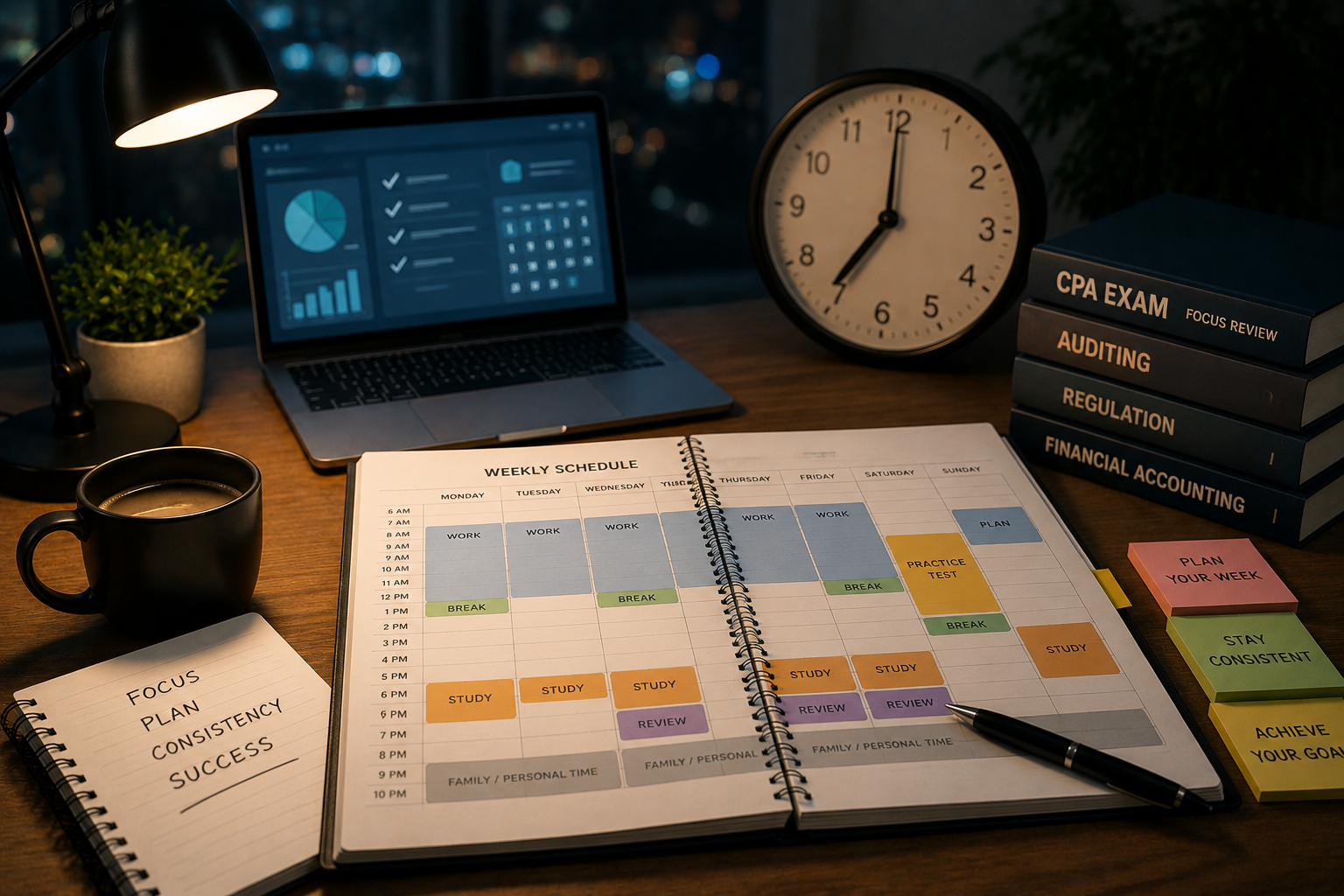
Many professionals benefit from structured study models. The Incremental Study Model involves studying 1 to 2 hours daily during the week, with additional time on weekends. For example, studying 90 minutes Monday through Friday and three hours on Saturday allows for steady progress and improved retention. This aligns well with modular learning approaches like those at TAPA Institute.
The Block Study Model focuses on longer study sessions during weekends or days off, while lighter review activities—such as flashcards or short videos—are completed during the week. This model is useful for individuals with unpredictable weekday schedules but requires careful planning to avoid fatigue.
The Hybrid Model combines both approaches, with short weekday sessions and extended weekend study. For instance, one hour each weekday and three hours on weekends offers consistency and depth. Many professionals prefer this structure because it accommodates work demands while maintaining steady progress.
Building a Customized CPA Study Schedule
Creating a personalized schedule begins with assessing current knowledge and identifying strengths and weaknesses. Diagnostic tools, such as those offered by TAPA Institute, help candidates determine focus areas and allocate time effectively.
Once a baseline is established, candidates can divide the required 300–400 study hours across available weeks. Daily and weekly plans help maintain structure and track progress. A balanced approach should include reading, video lectures, multiple-choice questions, and simulations for comprehensive understanding.
Regular review sessions and simulated exams are essential. These reinforce knowledge, improve test-taking skills, and build confidence. Practice exams that include timing and performance analysis provide valuable feedback, allowing candidates to adjust their study strategies and focus on weaker areas.
How TAPA Institute Supports Working Professionals
TAPA Institute offers flexible learning solutions designed for busy professionals. Its platform allows users to access content anytime, making it ideal for individuals with varying schedules or frequent travel.
Structured yet customizable study plans help learners stay organized while adapting to personal and professional demands. The platform also includes quizzes, flashcards, and video lessons that support deeper understanding.
Students benefit from guidance provided by instructors and interaction with peers, which fosters motivation and accountability. Personalized support helps reduce stress and improve confidence throughout the preparation process.
Sample 16-Week Study Plan for a Working Professional
Weeks 1–4: Watch lessons, review notes, and complete daily modules using structured materials.
Weeks 5–8: Add topic-focused exercises, flashcards, and quizzes to reinforce understanding.
Weeks 9–12: Complete advanced practice, review key concepts, and take one full practice exam each weekend.
Weeks 13–15: Focus on high-priority topics, complete comprehensive reviews, and take additional practice exams.
Week 16: Engage in light review, maintain a calm mindset, and prepare mentally for the exam.
This schedule ensures steady progress, adequate rest, and consistent evaluation, making it effective for working professionals.
Tips for Success: Maximizing Study Efficiency
Working professionals can enhance efficiency by using small blocks of time, such as commuting or breaks, to review notes or listen to lectures. These incremental efforts add valuable study time without overwhelming schedules.
Setting SMART goals (Specific, Measurable, Achievable, Relevant, Time-bound) improves focus and accountability (Doran, 1981). For example, “Complete two chapters and score 80% on practice questions by Sunday” provides a clear benchmark for success.
Minimizing distractions is also important. Studying in a quiet environment and limiting phone and social media use improves concentration and retention. Tools that block distractions can further enhance productivity.
Maintaining physical and mental health is equally critical. Regular exercise, proper nutrition, and sufficient sleep support memory and overall performance (Walker, 2017). Celebrating small achievements helps maintain motivation and a positive mindset throughout the process.
Real-Life Success: Working Professionals Who Passed with TAPA Institute
Many professionals have successfully passed the CPA exam while working full-time using TAPA Institute. Testimonials frequently highlight the platform’s flexibility, structured learning paths, and accessibility.
Students appreciate the clarity of instructional videos, the effectiveness of practice exams, and the support provided by instructors. Progress tracking tools allow learners to focus on weaker areas and study more efficiently.
Many users report that structured plans and continuous motivation helped them stay consistent despite demanding schedules. These success stories demonstrate that discipline, preparation, and the right support system make it possible to achieve CPA certification while maintaining professional responsibilities.
Conclusion
Earning a CPA certification while working full-time is challenging but achievable with proper planning and resources. Success requires structure, consistency, and effective tools. Choosing a study plan that aligns with personal and professional commitments is essential.
TAPA Institute provides flexible learning paths, expert guidance, and tailored materials designed for working professionals. With dedication, strategic preparation, and the right support, candidates can successfully pass the CPA exam and advance their careers.
References
Becker Professional Education. (2023). CPA Exam preparation resources.
Miles Education. (2024). CPA study tips for working professionals.
NetSuite. (2022). CPA exam study strategies.
NASBA. (2021). Effective CPA study methods.
Surgent CPA Review. (2023). CPA exam preparation guidance.
Uplift Professionals. (2022). CPA study techniques.
VSCPA. (2024). CPA exam preparation support.