Failed the CPA Exam? Here Is What to Do Next
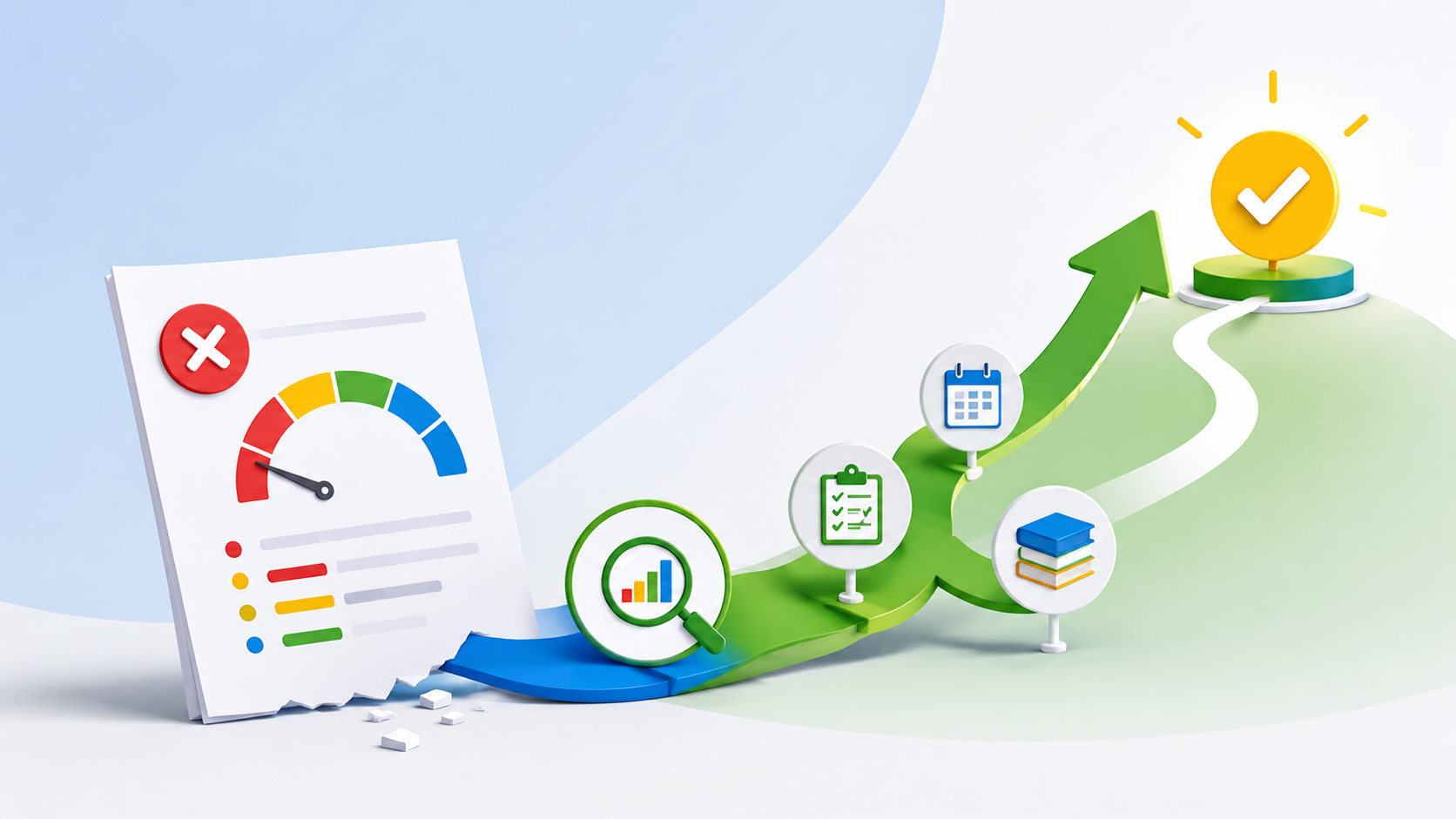
If you just received a failing score on the CPA exam, I want you to hear this first: it does not define your future. Not even close.
I am Dr. Sabine Charles, founder of TAPA Institute and The CPA Doctor. Before I built a program that has helped hundreds of accounting professionals pass the CPA, CIA, CFE, CISA, and CISM exams, I sat in the exact same seat you are sitting in right now. I know what it feels like to walk out of that testing center carrying a score that fell short of 75. I know how disorienting it is to have studied as hard as you did and still not be on the other side of the pass line.
After more than 15 years advising senior executives at Deloitte, American Express, and Citibank on risk management, internal controls, and fraud prevention, I built TAPA Institute because the way most people prepare for the CPA exam is fundamentally broken. If you have just received a failing score, here is the most important thing I can tell you right now: failure is almost never about intelligence or work ethic. It is almost always about strategy. And strategy is entirely fixable.
Step 1: Give Yourself 24 Hours , Then Choose to Move Forward
The first and most important thing to do after a CPA exam failure is to allow yourself exactly one day to feel what you need to feel. Disappointment is valid. Frustration is real. Rest is necessary. Give yourself that 24 hours.
But tomorrow, you shift. Because one of the most damaging patterns I see among retakers is what I call the spiral of avoidance , weeks, sometimes months, of delaying a restart because the failure still feels too raw to face. Every day you delay, your knowledge fades a little more, your momentum stalls, and your next exam window creeps closer without any progress made.
Be human with yourself for one day. Then make the decision to diagnose, not despair. That decision is the first step to passing.
Step 2: Read Your Score Report Like a Doctor Reads Test Results
Your CPA exam score report is not just a number. It is one of the most valuable diagnostic tools you have access to, and most candidates never use it properly. The AICPA provides performance feedback broken into content areas rated as Stronger, Average, or Weaker. These ratings are your starting point, not the score itself.
As The CPA Doctor, I always say: you cannot prescribe a remedy for a problem you have not diagnosed. The most common and costly mistake CPA retakers make is going back to their materials and studying everything equally , essentially repeating the same approach that produced the same result. That is not perseverance. That is a cycle you need to interrupt.
Your score report tells you which two or three content areas need the most attention. Those are your priorities. Everything else is maintenance. If interpreting your score report feels confusing or you are unsure how to translate the feedback into a concrete study plan, this is exactly what TAPA's Skills Assessment is built to do. We analyze your diagnostic data, your study history, and your performance patterns to give you a precise, personalized roadmap for your retake , the difference between studying harder and studying smarter.
Step 3: Understand That More Hours Is Not the Answer
Here is the hard truth I share with every retaker: most candidates who fail the CPA exam did not fail because they did not study enough. They failed because they studied without an effective strategy , wrong method, wrong priority order, wrong type of practice for the format of the exam.
Adding more hours to a broken method produces more exhaustion and the same score. What needs to change is how you study, not just how long.
For most retakers, this means making concrete shifts. Moving from passive review , re-reading notes and rewatching lecture videos , to active recall, where you retrieve information from memory and test yourself relentlessly. Reducing MCQ quantity and increasing review quality, understanding every wrong answer rather than checking off completion boxes. Taking task-based simulations seriously with a structured approach, because SIMs require application and judgment, not just recognition.
And critically, it means addressing the mental side of exam performance. Stress, anxiety, and confidence gaps are real factors in exam results. At TAPA Institute, we treat the whole candidate , not just their accounting knowledge. This is why our approach integrates mindset coaching and, where appropriate, hypnotherapy techniques to help candidates perform at their best when it counts most.
Step 4: Take Honest Stock of What Else Needs to Change
Beyond your content strategy, the retake process requires an honest audit of everything that shaped your first attempt. Were you studying consistently, or in sporadic bursts that made retention nearly impossible? Were you managing a demanding full-time job and trying to compress study time into stolen windows? Was your review course a genuine fit for your learning style, or were you forcing yourself through a format that never worked for you?
These questions matter because they shape your retake approach. At TAPA Institute, we build study plans around your actual life , your work schedule, your learning style, your strongest and weakest content areas, and your target exam date. Our approach is built on the APCP framework: Assess, Plan, Coach, Pass. We never hand every candidate the same generic plan and tell them to follow it. Personalization is not a selling point. It is the entire foundation of how we work.
Step 5: Decide Whether You Need Professional CPA Tutoring Support
When I was building my own credential portfolio , the DBA, CIA, CFE, CISA, and CISM all required sustained effort , I wish I had had the kind of targeted expert support I now provide to my students. Trying to self-study complex material across multiple exam sections while managing a full professional career is genuinely difficult, and there is nothing weak about recognizing that.
CPA tutoring is not a remediation measure. It is a strategic investment in passing efficiently. At TAPA Institute, our tutoring sessions are focused, targeted, and built entirely around your gaps. We do not begin at Chapter 1 and move forward. We begin with your score report, your diagnostic weaknesses, and your target section, and we build every session from there.
Whether you need a single deep-dive session to shore up a specific content area, a structured three-, six-, or nine-session package for broader support, or an intensive boot camp to accelerate toward a hard deadline, TAPA has options designed for working professionals at every stage of their retake journey. Many of our most successful students are retakers who came back, changed their approach, and passed on their next attempt.
Step 6: Register for Your Next Exam Date Right Now
One of the most practically powerful things you can do after a failing score is to register for your next exam date as soon as you become eligible. Not eventually. Not when you feel ready. Now.
Having a concrete date transforms how you use your time every day. It shifts your mindset from 'I should study' to 'I have nine weeks and here is exactly what needs to happen.' It creates urgency and accountability that vague intention simply cannot replicate.
If you are uncertain how much preparation time you need for your retake, TAPA's Skills Assessment includes a personalized study timeline built around your specific gaps, your available hours per week, and your exam window. You get a concrete answer , not a generic estimate pulled from a review course FAQ.
A Final Word From Dr. Sabine
I have worked with hundreds of students who went from devastated by failure to walking out of that testing center with a passing score. The difference, in nearly every case, was not exceptional talent. It was the right strategy, the right level of support, and the right mental framework for what the exam actually demands.
You did not fail because you cannot do this. You failed because the approach needs to change. And that is entirely, completely fixable.
Your score report was the diagnosis. Now it is time for the prescription. Take TAPA's Skills Assessment today to get your personalized retake roadmap, or book a free consultation to talk through your score and your next steps. Let us build a plan that actually gets you across the finish line.
Understanding Your NTS Window and Retake Eligibility
One practical matter that many retakers lose track of in the emotional aftermath of a failing score is the NTS , the Notice to Schedule. Your NTS has an expiration date, and if you do not sit for a section within the valid window, your exam registration fees are forfeited and you need to reapply. In New York State, NTS validity is currently 18 months, but this varies by jurisdiction, so verifying your specific window after a failed attempt is important.
The retake waiting period between attempts for a given section is typically one day after your failed exam score is released, though NTS logistics may affect when you can actually schedule. The practical implication: you generally do not need to wait long before scheduling your retake, which means there is no logistical reason to delay the restart beyond your 24-hour recovery window.
If your NTS window is running short and you need to sit within a limited timeframe, this is exactly the scenario where TAPA's boot camp format delivers the most value , concentrated, intensive preparation structured around a hard deadline. Do not let the NTS window expire. Contact TAPA as soon as you know your retake timeline and we will help you build the right preparation approach for your available window.
▶ READY TO TAKE THE NEXT STEP?
Take the TAPA Skills Assessment