
CPA Exam Tutoring: How One-on-One Sessions Accelerate Your Pass
In "CPA Exam Tutoring: How One-on-One Sessions Accelerate Your Pass," the TAPA Institute tackles the misconception that tutoring is only for immediate crisis management by breaking down the benefits of a structured, multi-week coaching program. By pairing ongoing coaching with intensive, short-term resources like boot camps and mindset coaching for exam anxiety, candidates can significantly improve their performance, noting that TAPA’s coached students have achieved a pass rate of approximately 85 percent.

What to Expect From a CPA Exam Prep Tutor
In "What to Expect From a CPA Exam Prep Tutor," the TAPA Institute tackles the distinction between content delivery and strategic coaching by breaking down the specific role a tutor plays in a candidate's preparation. TAPA highlights that sessions are most effective when grounded in concrete evidence from recent practice performance—rather than vague requests for topic review—creating an iterative loop of practice, diagnosis, and adjustment that is essential for long-term success.

How to Find the Right Online Tutor for the CPA Exam
In "How to Find the Right Online Tutor for the CPA Exam," the TAPA Institute tackles the challenge of finding an effective coaching partner by moving beyond simple accounting knowledge to emphasize diagnostic skill and structural familiarity. TAPA highlights the importance of vetting prospective tutors on their specific expertise with your chosen Discipline, their history of working with retakers if applicable, and their ability to provide flexible scheduling and complementary support like boot camps or anxiety coaching.

The Benefits of Online Tutoring for CPA Exam Candidates
In "The Benefits of Online Tutoring for CPA Exam Candidates," the TAPA Institute tackles the transition of coaching from a niche convenience to the industry-default format by breaking down how virtual sessions specifically address the constraints faced by working professionals. TAPA highlights the importance of vetting programs by confirming that tutors are licensed CPAs familiar with the current CPA Evolution blueprint, ensuring that the service begins with an objective skills assessment to maximize efficiency and scheduling flexibility.

The Ultimate CPA Exam Study Guide for First-Time Candidates
In "The Ultimate CPA Exam Study Guide for First-Time Candidates," the TAPA Institute tackles the overwhelming nature of beginning the CPA journey by breaking down the core structural, scoring, and operational components of the CPA Evolution model. The article highlights the importance of early intervention—advocating for the use of tutoring sessions to resolve specific comprehension gaps before they compound—and suggests that candidates incorporate stress management and formal boot camps as they move beyond their initial preparation phase.

How to Create a CPA Exam Study Plan for Each Section
In "How to Create a CPA Exam Study Plan for Each Section," the TAPA Institute tackles the challenge of moving beyond generic study outlines by breaking down the necessity of leveraging AICPA Exam Blueprints for every individual section. The article highlights the importance of maintaining an agile plan that is adjusted after every practice exam, advocating for the use of tutoring and boot camps as intensive support for candidates whose progress stalls despite their best efforts.
Building a CPA Exam Study Schedule by Section
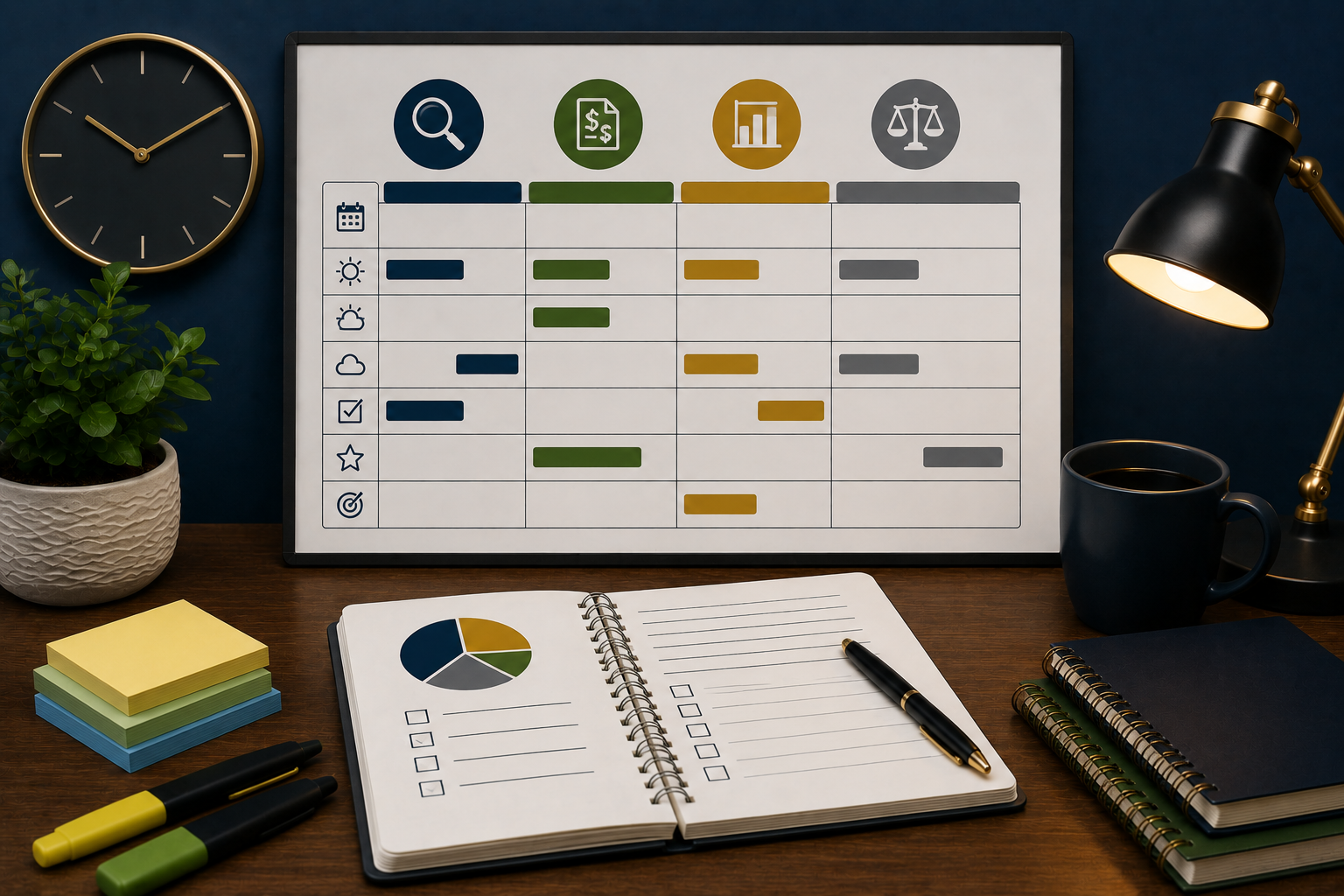
In "Building a CPA Exam Study Schedule by Section," the TAPA Institute tackles the operational challenge of creating a realistic timeline by breaking down the varied demands of the CPA Evolution sections. TAPA advocates for a balanced weekly structure that alternates between weekday content review and weekend practice simulations, and highlights the importance of using skills assessments to establish a personal baseline rather than relying on generic averages.

CPA Exam Study Essentials: What to Cover and How
In "CPA Exam Study Essentials: What to Cover and How," the TAPA Institute tackles the vast scope of the CPA Evolution model by breaking down the mandatory Core sections (AUD, FAR, REG) and their relationship to the specialized Discipline sections (BAR, ISC, TCP). The article emphasizes that while Core sections establish fundamental knowledge in auditing, GAAP, and taxation, Discipline sections require a deeper, specialized mastery that builds directly upon Core concepts.

Understanding Your BAR Score on the CPA Exam
In "Understanding Your BAR Score on the CPA Exam," the TAPA Institute explains that the Business Analysis and Reporting (BAR) section—one of three available CPA Evolution Discipline options—is scored on a scale of 0 to 99, with a passing score of 75. Because BAR builds upon the foundational knowledge established in the Financial Accounting and Reporting (FAR) Core section, candidates are encouraged to leverage their recent FAR studies when preparing for BAR.
Why a CPA Skills Assessment Is the Smartest First Step
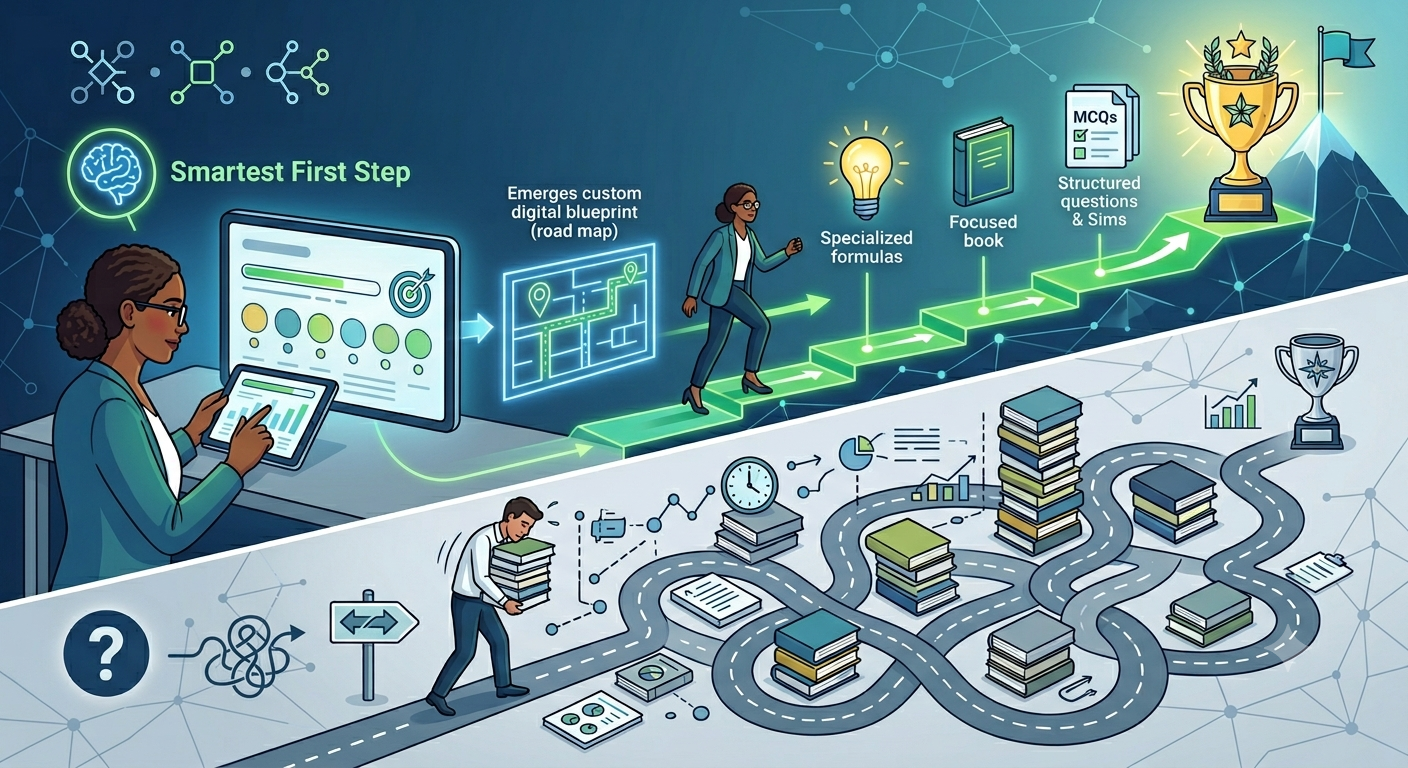
In "Why a CPA Skills Assessment Is the Smartest First Step," the TAPA Institute positions diagnostic testing as the fundamental "zero-week" requirement for efficient exam preparation. The article argues that the most common failure point for CPA candidates is not a lack of effort, but a lack of direction—specifically, the tendency to treat all accounting topics as equally challenging, which leads to wasted time on topics already mastered.

TAPA Institute's 85% Pass Rate: What It Means and How It's Achieved
In "TAPA Institute's 85% Pass Rate: What It Means and How It's Achieved," the TAPA Institute contextualizes its reported 85%+ pass rate by distinguishing between general candidate outcomes and the results of its own closely coached students. The article emphasizes that this figure is not a blanket guarantee for every purchaser, but rather a performance metric for candidates who leverage TAPA's comprehensive support system, which combines technical study materials with personalized guidance.

Group Classes vs. One-on-One CPA Exam Prep: Which Wins?
In "Group Classes vs. One-on-One CPA Exam Prep: Which Wins?", the TAPA Institute navigates the classic dilemma of exam prep strategy: choosing between the structured accountability of group bootcamps and the surgical precision of one-on-one tutoring. The article frames the choice not as a winner-take-all battle, but as a strategic decision based on learning style and the specific stage of a candidate's journey.

How to Study for the CPA Exam: A Step-by-Step Method
In "How to Study for the CPA Exam: A Step-by-Step Method," the TAPA Institute outlines a rigorous, diagnostic-first framework designed to move candidates from passive learners to exam-ready practitioners. By shifting the focus from simply "consuming" content to a structured four-step process, TAPA addresses the efficiency gap that often leads to burnout and exam failure.

CPA Courses 101: Education, Exam Prep, and Licensure Explained
In "CPA Courses 101: Education, Exam Prep, and Licensure Explained," the TAPA Institute clarifies the three distinct stages of a CPA's professional development. By helping candidates locate themselves within this roadmap, TAPA provides clarity on when to invest in university credits versus when to pivot to strategic exam preparation like its core-and-discipline bundles.

CPA Exam Prep Options at TAPA: Self-Paced, Tutoring, or Bootcamp
In "CPA Exam Prep Options at TAPA: Self-Paced, Tutoring, or Bootcamp," the TAPA Institute frames exam preparation not as a singular purchase, but as a modular, scalable ecosystem. TAPA empowers candidates to take agency over their own preparation, scaling their investment in instruction based on their specific progress, confidence, and timeline.

CPA Test Prep Courses for Career Changers and Non-Traditional Candidates
In "CPA Test Prep Courses for Career Changers and Non-Traditional Candidates," the TAPA Institute acknowledges that the path to CPA licensure is rarely linear. Rather than offering a "one-size-fits-all" solution, TAPA promotes a flexible ecosystem: using diagnostic skills assessments to bypass already-mastered material, utilizing self-paced study for busy professionals, and leveraging intensive boot camps to meet urgent deadlines.

Top Features of Effective CPA Review Courses
In "Top Features of Effective CPA Review Courses," the TAPA Institute synthesizes the essential criteria for high-performing exam preparation. By emphasizing that a course is only as good as its ability to help a candidate focus on their specific knowledge gaps, TAPA highlights the importance of skills assessments and targeted support (like tutoring) over generic, sprawling material.